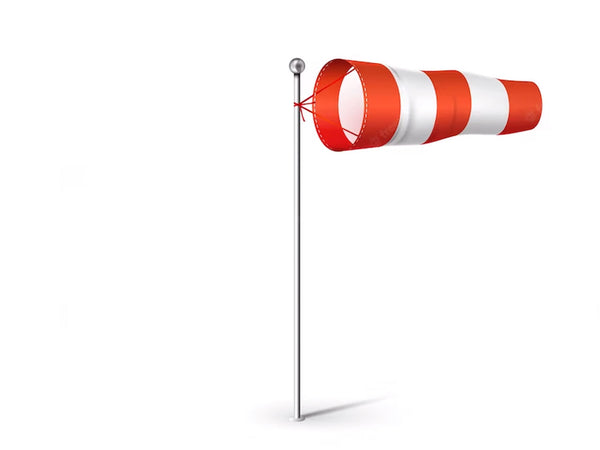
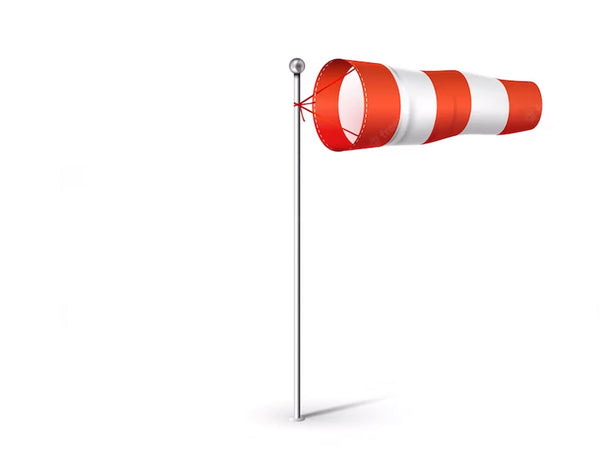
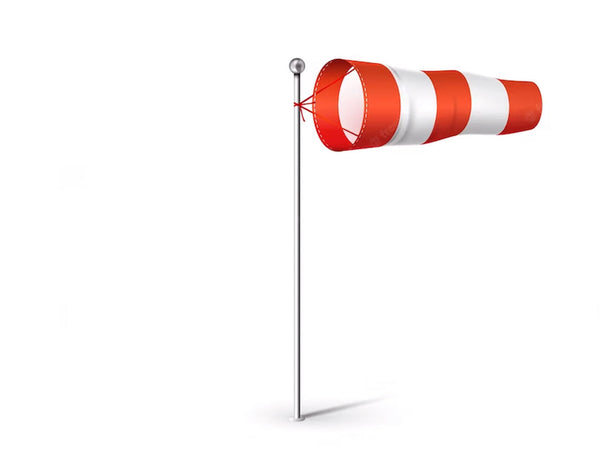
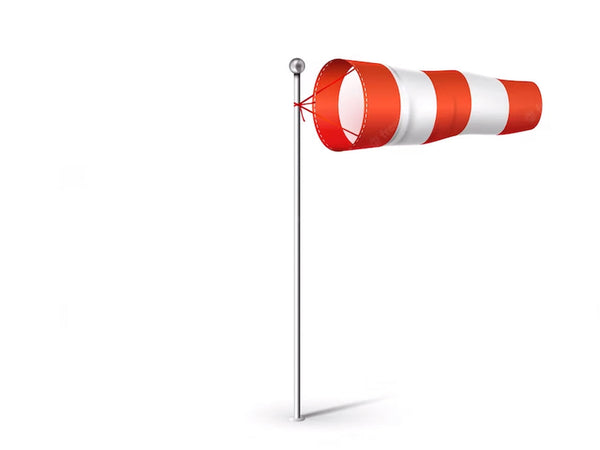
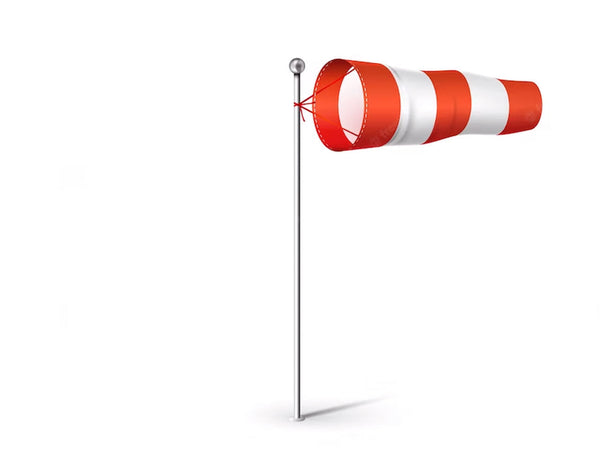
Airport wind direction indicators
A wind direction indicator is not just a functional element, but also a stylish addition to your space. It is made from high-class German polyester with a density of 110 g/m², ensuring excellent visibility even in light winds. By choosing from several sizes, you will be able to find the ideal solution that harmoniously fits into the surrounding environment and meets all safety and functionality requirements.
When choosing the installation location for a wind direction indicator, several key factors must be considered to ensure its effective operation. Here are some aspects to pay attention to:
Installation height: The indicator must be installed at a sufficient height to avoid the influence of ground obstacles on the accuracy of readings.
Spatial arrangement: Avoid installing the indicator close to tall buildings, trees, or other obstacles that can distort the wind direction.
Safety: It must be ensured that the installation location is safe and does not endanger surrounding people and objects.
Visibility: It is better to choose a location from which the indicator will be clearly visible from key vantage points to ensure its functionality.
Service accessibility: The installation location must provide easy access for maintenance and regular checking of the indicator's condition.
Aesthetic considerations: If the indicator is also a decorative element, aesthetic preferences and the stylistic design of the area should be considered.
Legal and regulatory requirements: In some cases, there may be legal requirements or regulations governing the installation of indicators, especially in public or industrial areas.
Taking into account all the aspects mentioned above, it is important to carefully choose the installation location to ensure the accuracy and effectiveness of the indicator in showing wind direction.
Main areas of application
In aviation: To indicate wind direction and strength at airports and heliports.
In the chemical industry: In chemical enterprises for monitoring wind direction to observe safety measures, including in emergency situations. To plan and control the release of harmful substances into the atmosphere.
In agriculture: To determine the optimal time for various agricultural activities, including spraying fertilizers and pesticides.
In maritime and river navigation: To ensure the safety of ships in ports and marinas.
In meteorology: For meteorological stations to collect wind direction data and analyze climatic conditions.
In construction: To assess safety conditions on construction sites, especially when working at height.
In sports: To help athletes choose optimal tactics on golf courses, at yacht clubs, and windsurfing clubs.
In private homes and estates: As a functional and decorative element of landscape design, as well as for planning garden work depending on wind direction.